
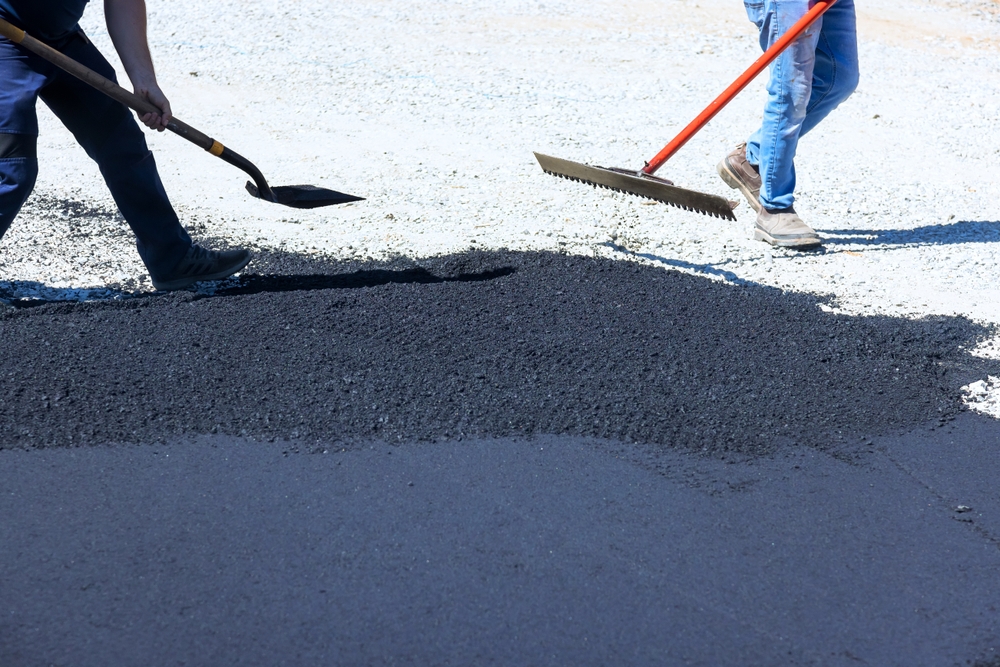
How Kentucky Weather Affects Asphalt Paving in Mt. Washington, KY
A driveway or parking lot in Mt. Washington has to handle more than daily traffic. Kentucky weather can shift from summer heat and heavy rain to winter freezes, creating conditions that affect when asphalt should be installed and how long existing pavement holds up.
The weather on paving day matters, but so do drainage, ground conditions, seasonal temperature swings, and the condition of the pavement underneath.
Quick answer: Kentucky weather affects asphalt paving by changing how quickly asphalt cools, how well it compacts, how moisture behaves beneath the pavement, and how existing cracks expand over time. Warm, dry conditions are generally best for paving, while rain, saturated ground, cold temperatures, and repeated freeze-thaw cycles can complicate installation or accelerate pavement deterioration.
What local property owners should know
-
Asphalt needs appropriate temperatures and dry conditions so crews have enough time to place and compact the material properly.
-
Rainfall around Bullitt County can expose drainage problems that weaken pavement edges or allow water beneath the surface.
-
Winter freezing and thawing can turn small cracks into larger pavement problems when water enters them.
-
Hot Kentucky summer conditions can make existing asphalt more flexible, especially in areas exposed to heavy or concentrated loads.
-
The best paving schedule depends on current conditions, the pavement design, site preparation, and the specific asphalt mixture being used.
Why Does Kentucky Weather Matter for Asphalt Paving?
Kentucky weather matters for asphalt paving because asphalt performance depends heavily on temperature, moisture, and the stability of the surface underneath it. In Mt. Washington, seasonal heat, frequent rainfall, and freezing winter temperatures can all influence installation timing and the long-term condition of driveways, parking areas, and access lanes.
Properties around US 31E, KY 44, and the surrounding Bullitt County area experience the same broad seasonal swings found throughout the Louisville region. Summers can be hot and humid, while winter temperatures regularly fall low enough for freezing conditions.
Those changes are especially important once pavement develops cracks. Water can enter an opening, move into the base, freeze during cold periods, and contribute to additional movement or deterioration.
MVP Paving works with asphalt surfaces in these changing local conditions. We consider weather alongside drainage, base preparation, pavement condition, and intended traffic when evaluating a paving project.
What Does Local Weather Data Tell Property Owners?
Local weather data shows that the Louisville and Bullitt County region receives meaningful precipitation while also experiencing temperatures on both sides of the freezing point. National Weather Service Louisville climate reporting reflects cold winter periods, wet spring conditions, and warm summer temperatures, all of which are relevant to asphalt installation and maintenance.
For example, National Weather Service climate data for the Louisville area lists normal March precipitation at more than four inches and normal nighttime temperatures in the upper 30s. Winter climate records also show numerous nights at or below freezing.
Those figures illustrate why asphalt planning here cannot be based only on the calendar. A warm afternoon in early spring may follow a cold night, while several days of rain can leave the underlying ground too wet for certain paving operations.
How Do Heat, Rain, and Freezing Temperatures Affect Local Asphalt?
Heat, rain, and freezing temperatures affect asphalt in different ways: heat influences surface flexibility, rain introduces moisture into cracks and pavement bases, and freezing temperatures can expand trapped water. Over multiple Kentucky seasons, those forces can gradually contribute to cracking, depressions, edge deterioration, and other pavement problems.
Summer heat is not automatically bad for asphalt. Warm weather is often favorable for installation because hot asphalt can remain workable long enough for proper placement and compaction.
The problem comes when an existing pavement surface has structural weaknesses or experiences concentrated loading. Hot pavement can become more flexible, making weak areas more noticeable.
Rain creates a different concern. Standing water along a driveway or parking lot can indicate drainage issues, particularly on properties with low spots or poorly supported edges.
Winter adds freeze-thaw stress. Water that has entered cracks can freeze, expand, thaw, and move deeper into weakened pavement areas.
What Are the Warning Signs Weather Is Damaging Your Asphalt?
Weather-related asphalt damage usually appears as cracking, standing water, crumbling edges, depressions, loose material, or recurring potholes. Property owners in Mt. Washington should pay particular attention after periods of heavy rain, summer heat, or repeated winter freezes because those conditions can reveal weaknesses that were less obvious before.
Watch for:
-
Cracks that appear wider after winter.
-
Water that remains on the pavement after surrounding areas have dried.
-
Depressions or low areas where runoff collects.
-
Crumbling or broken pavement edges.
-
Loose aggregate appearing on the surface.
-
Potholes that return after temporary patching.
-
Areas that sink or move under vehicle traffic.
-
New cracking around previously repaired sections.
One isolated surface crack does not necessarily mean an entire driveway needs replacement. A pattern of drainage problems, movement, and recurring repairs deserves a closer look.
When Should You Call an Asphalt Professional?
You should call an asphalt professional when pavement damage appears structural, drainage repeatedly causes standing water, potholes continue returning, or large portions of the surface are cracking or sinking. Local property owners can monitor small changes, but determining whether the problem is limited to the surface or extends into the base requires a closer evaluation.
Simple maintenance observations are safe for most property owners. After storms, check where water flows. After winter, inspect existing cracks and edges. Notice whether particular areas hold water or feel unstable under traffic.
Professional evaluation becomes more useful when the same problem keeps returning. Repeated patching without correcting failed base material or drainage can address the symptom without resolving the underlying cause.
What Weather Conditions Commonly Cause Asphalt Problems in Bullitt County?
The most common weather-related asphalt problems in Bullitt County come from water infiltration, freeze-thaw cycles, prolonged summer heat, and saturated ground. These conditions often work together, which is why drainage and pavement preparation can be just as important as the asphalt surface itself.
1. Water infiltration: Rain entering pavement cracks can weaken material below the asphalt and contribute to movement.
2. Freeze-thaw cycles: Moisture inside cracks or the pavement base can freeze and expand during cold periods, then thaw again as temperatures rise.
3. Summer heat: Warm pavement becomes more flexible, which can expose weak areas under heavy vehicles or concentrated loads.
4. Saturated soil or base material: Extended rainfall can leave underlying materials wetter and less stable than they appear from the surface.
5. Poor drainage: Water repeatedly flowing toward pavement instead of away from it increases the opportunity for moisture-related deterioration.
These issues can occur on residential driveways as well as commercial parking areas throughout the corridor between Mt. Washington, Shepherdsville, and Louisville.
How Can You Protect Asphalt From Kentucky Weather?
You can protect asphalt from Kentucky weather by keeping water away from the pavement, addressing cracks before they expand, limiting unnecessary heavy loads, and inspecting the surface after harsh seasonal conditions. Preventive maintenance is most effective when small pavement problems are handled before moisture reaches deeper layers.
Keep nearby drainage paths and pavement edges clear enough for water to move away from the surface. Avoid allowing soil, leaves, or debris to create areas where runoff continually pools.
Spring is a useful time to look for winter-related cracking. Summer provides an opportunity to observe areas that deform under heat or traffic. Fall inspections can identify cracks worth addressing before another cycle of freezing weather arrives.
Property owners can perform visual checks themselves, but excavation, structural repairs, major patching, resurfacing, and paving should be handled with equipment and methods appropriate for the pavement.
What Results Should You Expect From Professional Asphalt Work?
Professional asphalt work should create a properly prepared, compacted surface designed for the site’s drainage, traffic, and existing conditions. The exact result depends on whether the project involves repair, resurfacing, or new paving, because weather-related surface damage cannot always be corrected without addressing problems underneath.
For a new asphalt area, proper preparation provides the foundation for the finished pavement.
For repairs, the goal is to remove or correct failed material rather than simply cover visible damage.
For resurfacing, the existing pavement must first be suitable to support a new asphalt layer. If extensive base failure is present, resurfacing alone may not solve the problem.
What Asphalt Maintenance Mistakes Should Local Property Owners Avoid?
The biggest asphalt maintenance mistakes are ignoring drainage, repeatedly patching the same failure, waiting for small cracks to become larger, and scheduling work without considering actual site conditions. On Kentucky properties, these mistakes give rain and freeze-thaw cycles more opportunity to turn manageable pavement issues into larger repairs.
Mistake: Ignoring a puddle that appears after every storm.
Consequence: Water may continue entering weak pavement or base areas.
Better approach: Determine why the area is holding water before surface deterioration spreads.
Mistake: Filling the same pothole repeatedly.
Consequence: The underlying failure may continue moving.
Better approach: Evaluate the pavement and base around recurring damage.
Mistake: Choosing paving dates based only on the month.
Consequence: Recent rain or unexpected cold can affect site conditions.
Better approach: Schedule around actual temperature, moisture, and project requirements.
What Is a Common Asphalt Scenario in Mt. Washington?
A common local scenario is a driveway or small parking area that looks acceptable through summer but shows additional cracking after winter. Water enters existing openings during rainy periods, temperatures fall below freezing, and the damaged area becomes more visible by spring as vehicles continue traveling over it.
This does not mean every cracked surface requires complete replacement.
If the pavement remains structurally sound, targeted repairs or other maintenance may be appropriate. If widespread cracking, sinking, poor drainage, or base failure is present, more extensive work may provide a better long-term approach.
Which Asphalt Services Can Address Weather-Related Problems?
Weather-related pavement problems may be addressed through asphalt repair, resurfacing, or new paving depending on the depth and extent of the damage. The correct service starts with determining whether deterioration is limited to the surface or whether water, drainage, or base failure has affected the pavement structure.
Repairs can address localized failures. Resurfacing may provide a renewed driving surface when the existing pavement remains a suitable foundation. New paving may be appropriate for unpaved areas or surfaces where more extensive reconstruction is necessary.
How Do Repair, Resurfacing, and Replacement Compare?
Repair, resurfacing, and replacement solve different levels of pavement deterioration, so the best choice depends on how much of the asphalt has failed and what is happening underneath it. Local weather makes that distinction important because covering a moisture-related structural problem may provide only a temporary improvement.
Localized repair makes sense when damage is limited to specific areas.
Resurfacing addresses broader surface deterioration when the pavement below remains sufficiently stable.
More extensive replacement or reconstruction becomes more relevant when widespread cracking, movement, drainage problems, or failed base materials affect the integrity of the pavement.
An on-site assessment is the most reliable way to distinguish among these situations.
What Areas Around Mt. Washington Face Similar Asphalt Conditions?
Properties throughout Mt. Washington and surrounding Bullitt County face similar seasonal asphalt challenges, including properties toward Shepherdsville, Hillview, and the southern Louisville area. Nearby communities such as Fern Creek also experience comparable combinations of summer heat, rainfall, and winter freezing conditions.
Exact pavement conditions still vary by property because drainage, traffic, slope, soil conditions, pavement age, and previous construction all influence performance.
What Can Happen If Weather-Related Asphalt Damage Is Ignored?
Ignoring weather-related asphalt damage can allow water to penetrate farther into cracks, enlarge weak areas, and contribute to more extensive pavement or base deterioration. In Mt. Washington, waiting through additional rainy periods and freeze-thaw cycles may turn a localized problem into one that requires a larger repair.
The goal is not to treat every crack as an emergency. Instead, pay attention to changes.
A crack that stays relatively stable is different from an area that collects water, sinks, breaks apart, or grows noticeably from season to season.
FAQ About Kentucky Weather and Asphalt Paving
What is the best time of year to pave asphalt in Mt. Washington, KY?
The best time to pave asphalt in Mt. Washington is typically during consistently warm, dry weather when the asphalt mixture can be placed and compacted effectively. The exact paving window depends on pavement temperatures, air temperatures, recent rainfall, project size, and the asphalt mixture, so daily conditions matter more than a specific calendar date.
Can asphalt be paved after it rains in Mt. Washington?
Asphalt paving may be possible after rain once the work area and underlying materials are sufficiently dry and stable. A surface that looks dry does not always mean the base is ready. Heavy Bullitt County rainfall can leave lower layers saturated, so site conditions should be checked before paving begins.
Does Kentucky winter weather damage asphalt?
Kentucky winter weather can contribute to asphalt deterioration when water has entered cracks or weakened areas before temperatures fall below freezing. Freeze-thaw cycles can expand openings and disturb compromised pavement. Keeping cracks and drainage problems under control before winter can reduce the amount of moisture available to cause additional damage.
Is summer too hot for asphalt paving in Bullitt County?
Summer is generally a favorable season for asphalt paving because warm conditions help the material remain workable for placement and compaction. Extremely hot conditions can require crews to adjust operations, but summer heat itself does not automatically prevent paving. Project conditions and asphalt temperatures determine how the work should proceed.
Why does my driveway crack more after winter in Mt. Washington?
Driveways often show more visible cracking after winter because water can enter existing openings, freeze, expand, and contribute to pavement movement. Vehicle traffic then places additional stress on those weakened areas. Drainage problems or an unstable base can make seasonal cracking more severe.
Why does water collect on my asphalt after Bullitt County storms?
Water usually collects on asphalt because the surface has developed a low spot, the pavement has settled, or drainage does not move runoff away effectively. Persistent ponding deserves attention because standing water can find its way into cracks and weak edges, increasing moisture exposure beneath the pavement.
Can a weather-damaged driveway be repaired instead of replaced?
A weather-damaged driveway can often be repaired when deterioration is localized and the surrounding pavement and base remain stable. Widespread cracking, sinking, recurring potholes, or significant base failure may require a more extensive solution. An inspection helps determine whether repair, resurfacing, or reconstruction is appropriate.
Should I inspect my asphalt every spring in Mt. Washington?
A spring asphalt inspection is useful because winter conditions may reveal new cracks, loose edges, depressions, or drainage problems. Property owners can perform a basic visual inspection themselves. Areas that have moved, collect water, or repeatedly fail should be professionally evaluated before another year of rain, heat, and freezing conditions.
Protect Your Pavement Through Kentucky’s Changing Seasons
Kentucky weather places asphalt through repeated cycles of heat, rain, freezing temperatures, and changing ground conditions. Understanding those stresses can help Mt. Washington property owners choose better paving times, identify problems earlier, and make more informed decisions about repairs and replacement.
Plan Asphalt Work Around the Conditions That Matter
We can help you evaluate pavement condition, drainage concerns, and the appropriate asphalt solution for your local property.
Categorised in: Asphalt Paving