Why Is Water Pooling on My Asphalt Driveway? Drainage Problems and Solutions in Mt. Washington, KY
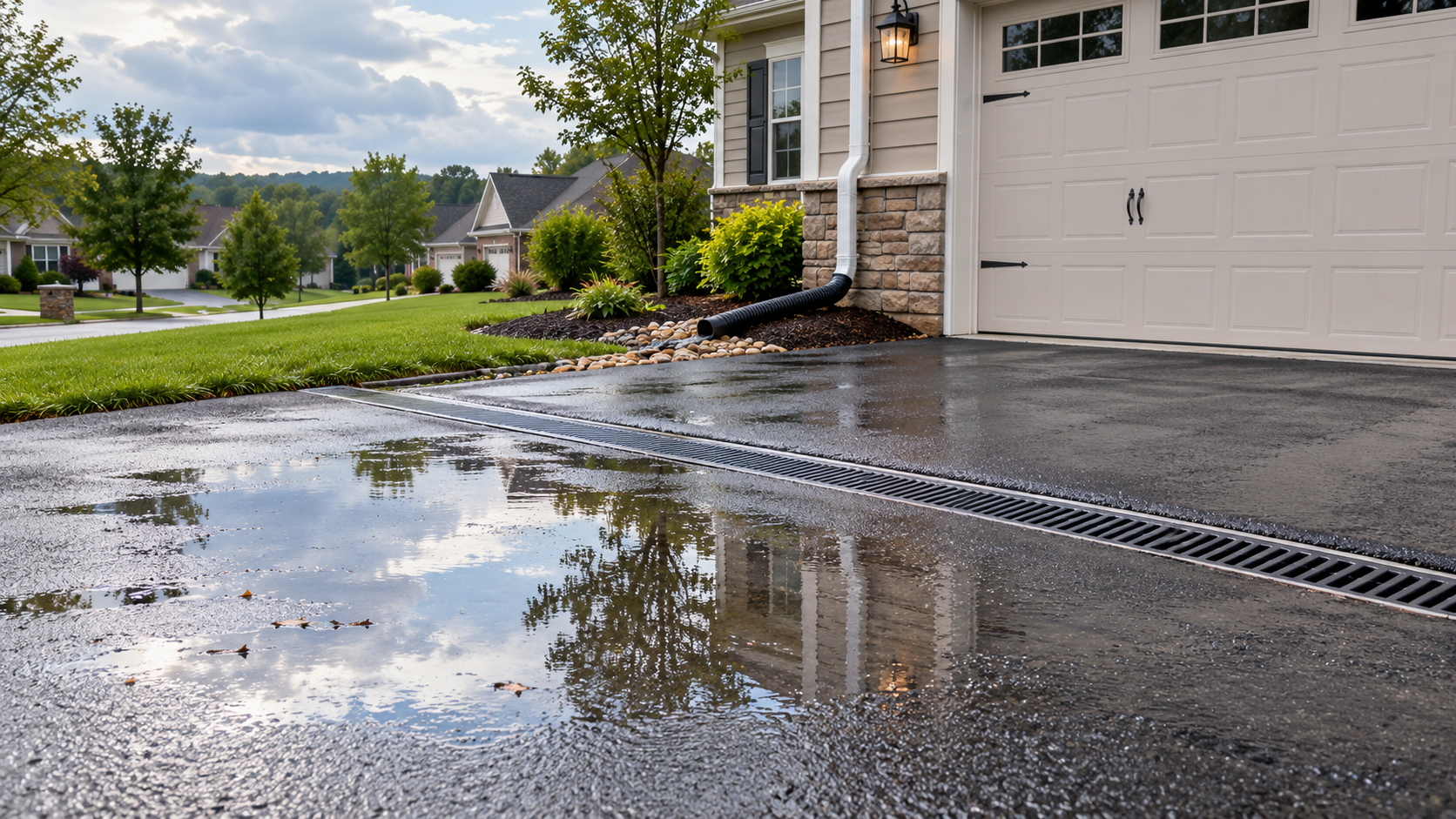
You walk outside after a heavy Kentucky rainstorm and notice something frustrating: there’s a large puddle sitting right in the middle of your driveway. Hours later, the water still hasn’t disappeared. Maybe you’ve noticed the same thing happening after every storm, or perhaps the puddles are getting larger as your driveway gets older. Either way, standing water isn’t something you want to ignore.
For homeowners in Mt. Washington, Shepherdsville, Louisville, and surrounding communities, asphalt driveway drainage problems can develop for several reasons. Improper grading, deteriorating pavement, sinking sections, and drainage issues beneath the surface can all prevent rainwater from flowing where it should.
Fortunately, water pooling on an asphalt driveway doesn’t automatically mean the entire surface needs replacing. Depending on the underlying problem, targeted repairs, drainage corrections, or resurfacing may be enough to restore proper water flow.
Here’s what homeowners should know:
- Improper grading: A driveway without adequate slope can trap rainwater instead of directing it away from the pavement.
- Cracks and potholes: Openings in the asphalt allow moisture to reach the underlying base, where additional damage may develop.
- Sinking pavement: Repeated puddles in the same depression can indicate settlement or problems with the supporting materials.
- Deteriorating edges: Runoff washing along unsupported driveway edges can contribute to cracking and crumbling.
- Kentucky’s changing weather: Heavy rainfall and winter freeze-thaw cycles can make existing pavement damage progressively worse.
At MVP Paving, we help homeowners throughout Bullitt and Jefferson Counties identify and address driveway problems before they become more expensive. With over 20 years of hands-on paving experience, we provide asphalt repairs, resurfacing, driveway installation, and on-site evaluations designed to address both the visible damage and the condition of the underlying pavement.
Why Does Water Pool on an Asphalt Driveway?
Water pools on an asphalt driveway when rainwater collects in low areas instead of flowing toward an appropriate drainage outlet. Common causes include improper surface grading, settlement beneath the pavement, damaged driveway edges, or surrounding landscaping that prevents runoff from escaping.
A properly constructed driveway needs sufficient slope to direct water away from buildings and other vulnerable areas. However, that slope can become less effective as the pavement ages or the supporting base shifts.
In Mt. Washington, properties along KY 44, Bardstown Road, and surrounding residential neighborhoods may have driveways with different elevations and layouts. Some slope toward the street, while others require careful grading to manage runoff around garages, yards, and adjacent structures.
If water repeatedly collects in the same location, the first step is determining why it isn’t draining. Simply filling a puddle without correcting its cause may only provide temporary relief.
How Improper Driveway Grading Causes Drainage Problems
Improper driveway grading causes drainage problems when the pavement lacks enough slope to move water toward a suitable outlet. Even a relatively shallow low spot can collect rainwater, particularly when surrounding pavement is higher and prevents water from escaping.
For example, a driveway in Shepherdsville might appear level from the street but have a slight depression near the garage. During a heavy rainstorm, runoff flows toward that depression and remains there because the surface doesn’t provide a continuous drainage path.
In other situations, water may collect along the driveway’s edges because nearby soil or landscaping sits higher than the pavement. This can prevent runoff from reaching the lawn or another appropriate drainage area.
A driveway grading contractor in Bullitt County, KY, can evaluate the surface elevations and determine whether grading corrections are necessary. Depending on the existing conditions, the solution may involve reshaping a section of pavement, improving the base, or rebuilding part of the driveway with a more effective slope.
Can Cracks and Potholes Make Driveway Drainage Worse?
Yes, cracks and potholes can make driveway drainage problems worse by allowing water to penetrate beneath the asphalt. Once moisture reaches the underlying base, repeated vehicle traffic and changing weather conditions can contribute to settlement, erosion, and further pavement deterioration.
Small cracks may not seem especially concerning at first. However, if water repeatedly enters those openings, the materials supporting the asphalt can gradually lose stability.
During Kentucky winters, water trapped in cracks or saturated pavement materials can also freeze and expand. Repeated freeze-thaw cycles may widen existing cracks and contribute to new damage.
For homeowners in Louisville and Mt. Washington, addressing these issues early can help limit deterioration. Crack filling, pothole patching, and other asphalt repair methods may be appropriate when the surrounding pavement and base remain structurally sound.
However, sealing a crack won’t correct an underlying drainage problem. If water continues collecting in the same area, additional work may be necessary.
What Does Sinking Asphalt Say About Your Driveway’s Condition?
Asphalt driveway sinking can indicate that the supporting base or underlying soil has settled, shifted, or lost stability. While some surface wear is normal over time, noticeable depressions that collect standing water deserve closer attention because the problem may extend below the asphalt.
Bullitt County’s clay-rich soils can be affected by changes in moisture. When the ground becomes saturated and later dries, soil movement may contribute to uneven support beneath inadequately prepared pavement.
A driveway might also settle because the original base wasn’t properly compacted or because water has gradually displaced supporting materials.
Common warning signs include:
- Puddles that repeatedly form in the same low spot.
- Visible depressions where vehicles regularly park.
- Cracks developing around sunken pavement.
- Uneven areas that become more noticeable after heavy rain.
- Potholes that return after previous repairs.
- Crumbling asphalt along unsupported edges.
These symptoms don’t always mean the entire driveway needs replacement. However, a professional evaluation can help determine whether a surface-level repair will be sufficient or whether the underlying base requires correction.
Why Driveway Edges Start Crumbling After Heavy Rain
Driveway edges often begin crumbling when runoff erodes the supporting soil or repeated vehicle traffic places pressure on sections without adequate support. Poor drainage can accelerate this deterioration, especially when water consistently flows along the pavement’s perimeter.
For example, a driveway near Hillview may have a narrow shoulder where rainwater collects and washes away loose soil. Over time, the asphalt edge can lose support, develop cracks, and begin breaking apart.
Driving too close to unsupported edges can make the situation worse. Once cracks form, moisture can enter and contribute to additional damage.
Depending on the condition of the pavement, repairs may involve removing damaged asphalt, rebuilding the supporting base, and installing a properly compacted patch. Correcting the drainage path and maintaining appropriate edge support can also help prevent the same problem from returning.
Choosing the Right Driveway Drainage Solution
The right driveway drainage solution depends on the location of the standing water, the condition of the asphalt, and whether the underlying base remains stable. Some driveways need minor repairs, while others require grading adjustments, resurfacing, or more extensive reconstruction.
Crack Filling and Asphalt Patching
Crack filling and patching are often appropriate when damage is limited to specific areas and the surrounding pavement remains structurally sound. These repairs can help reduce water infiltration and address isolated potholes or deteriorated sections.
However, patching a depression without restoring proper slope or correcting an unstable base may allow puddles to return.
Asphalt Driveway Resurfacing
Asphalt driveway resurfacing involves installing a new layer of asphalt over an existing surface. It may be a practical option when the underlying pavement and base remain stable, but the surface has experienced widespread wear.
For homeowners considering asphalt driveway resurfacing, drainage conditions should be evaluated before new material is installed. An overlay that follows the existing low spots may preserve the same water pooling problem.
Base Repair and Driveway Replacement
More extensive repairs may be necessary when the driveway has substantial settlement, widespread structural cracking, or an unstable base. In these cases, removing damaged sections and rebuilding the foundation can provide an opportunity to correct drainage problems.
At MVP Paving, we evaluate the existing pavement, drainage, and base condition before recommending a solution. Our approach to asphalt driveway repair in Mt. Washington, KY, focuses on identifying the underlying problem rather than simply covering up visible damage.
How Homeowners Can Prevent Future Driveway Drainage Problems
Preventing driveway drainage problems starts with keeping water moving away from the pavement, maintaining the asphalt surface, and addressing damage before it spreads. Regular inspections are particularly useful after heavy Kentucky rainstorms and during seasonal temperature changes.
Homeowners can begin by observing where water collects after rainfall. Pay attention to whether puddles form near the garage, along the driveway edges, or in areas showing visible cracking.
Keep nearby drainage outlets clear, avoid allowing landscaping materials to block runoff, and address developing cracks before moisture has additional opportunities to enter.
Sealcoating can also help protect sound asphalt from weathering and surface deterioration when applied under appropriate conditions. However, it isn’t a substitute for correcting improper slope, significant depressions, or underlying base failures.
Frequently Asked Questions About Asphalt Driveway Drainage
1. Why does my asphalt driveway have puddles after every rainstorm?
Recurring driveway puddles after rain usually indicate low spots, inadequate grading, or settlement beneath the pavement. If the same areas repeatedly collect water, a professional evaluation can help determine whether the problem involves the asphalt surface, underlying base, or surrounding drainage conditions.
2. Can standing water damage my asphalt driveway in Mt. Washington, KY?
Yes, standing water can contribute to pavement deterioration, particularly when cracks allow moisture to reach the supporting materials. Kentucky’s winter freeze-thaw cycles can make existing cracks and weakened areas worse, so persistent puddles should be investigated rather than ignored.
3. Will resurfacing fix a driveway that collects water?
Resurfacing may help when the existing base is sound and the project includes appropriate corrections to the surface slope. However, installing new asphalt over unstable pavement or significant depressions without correcting the underlying problem may allow drainage issues to continue.
4. How do I know if my driveway needs repair or replacement in Bullitt County?
The decision depends on the extent of damage and the condition of the supporting base. Isolated cracks and potholes may be repairable, while widespread sinking, severe cracking, or recurring structural failures may require more extensive reconstruction or replacement.
5. Does MVP Paving provide asphalt driveway repair near Shepherdsville and Louisville?
Yes. We provide asphalt paving, repairs, resurfacing, and related services throughout Mt. Washington, Shepherdsville, Louisville, and surrounding Bullitt and Jefferson County communities. Our on-site evaluations help identify pavement conditions and determine an appropriate scope of work.
6. Can driveway grading help keep water away from my garage?
Proper driveway grading can direct runoff away from a garage when site elevations and drainage conditions allow it. However, some properties may also require additional drainage improvements, depending on the surrounding terrain, existing structures, and available outlets for stormwater.
Stop Driveway Puddles Before They Turn Into Bigger Repairs
A puddle might not seem like a major concern when you first notice it, but repeated standing water can signal problems that deserve attention. Whether your driveway has developed a small depression, several spreading cracks, or crumbling edges, understanding the cause can help you avoid spending money on repairs that don’t address the underlying issue. For homeowners throughout Mt. Washington and the surrounding Louisville area, professional evaluation is a practical first step toward finding the right solution.
At MVP Paving, we believe your driveway deserves more than a quick surface fix when the problem runs deeper. Our experienced team evaluates drainage, pavement condition, and the supporting base before recommending asphalt repair, resurfacing, or replacement. If you’re tired of navigating puddles whenever it rains, we’re ready to help you explore practical solutions that fit your property and budget.
Contact MVP Paving today to schedule a free on-site estimate for asphalt driveway repair and drainage concerns in Mt. Washington, KY.
Categorised in: Asphalt Repair, Driveway Paving